Signs your siding is hiding water damage or mold
By Aisha Kowalski · Updated 2026-08-28
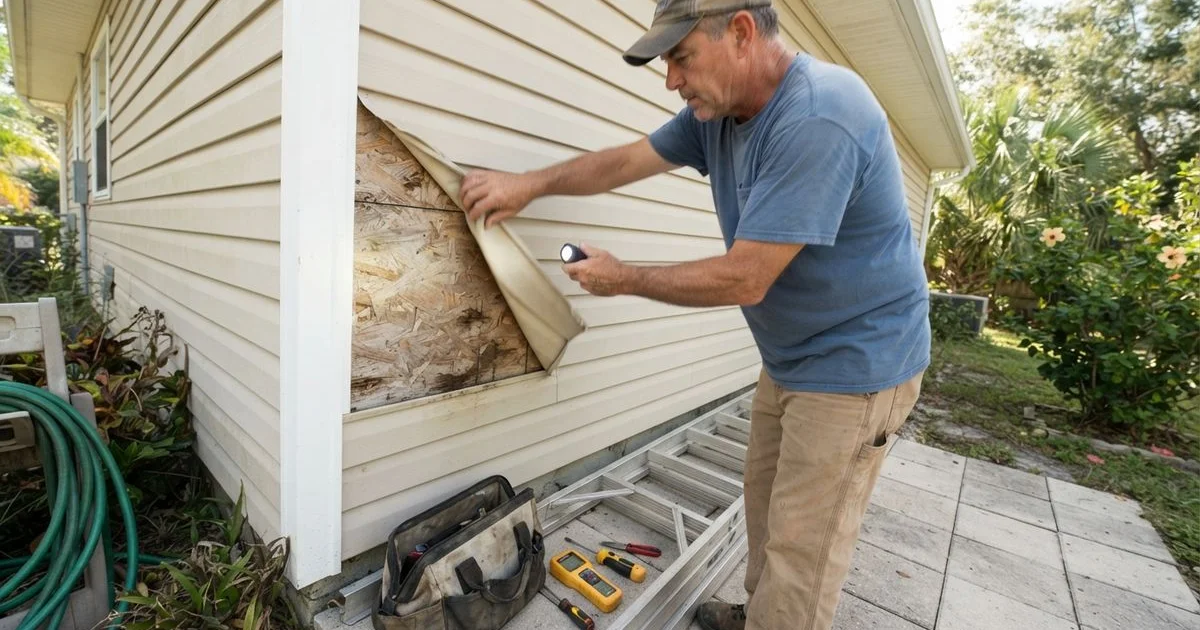
Siding’s whole job is keeping water out of your walls, and when it fails at that job quietly, the first sign homeowners usually notice is something small and easy to dismiss: a faint stain, a musty smell, or a spot on the wall that feels slightly different than the rest. Catching those early signs before they turn into a much larger repair is worth the few minutes it takes to check.
This is general information about spotting water damage and mold risk, not medical or professional inspection advice. If you have health concerns related to mold exposure, or suspect significant structural damage, consult a qualified professional.
The signs worth paying attention to
- Soft or spongy spots. Press gently on the wall near suspicious areas. Sound sheathing feels solid; water-damaged wood underneath often gives slightly under light pressure.
- Discoloration or staining. Dark streaks, especially running downward from a seam, window, or roofline, often trace back to a specific water entry point.
- A musty smell near an exterior wall. This is one of the more reliable early indicators of trapped moisture, even before any visible staining shows up.
- Peeling paint or bubbling drywall inside. Interior wall issues directly opposite exterior siding problems are a strong sign water has worked all the way through.
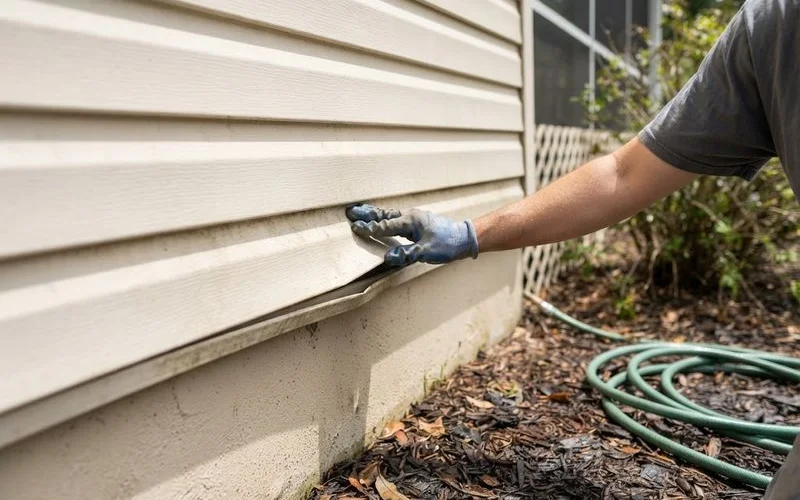
- Visible gaps or separated seams. Siding that’s pulled away from trim, corners, or window frames gives water a direct path in during wind-driven rain.
- Insect activity near the wall base. Termites and other pests are often drawn to moisture-softened wood, so unusual insect presence near siding can be a secondary clue.
Where water damage tends to start
| Common entry point | Why it happens |
|---|---|
| Around window and door trim | Caulking shrinks and separates over time, especially in heat and humidity |
| Where roof meets sidewall | Missing or failed flashing lets water run directly onto the wall |
| Low wall areas near grade | Splash-back and standing water increase exposure at the base |
| Panel seams and corners | Gaps here let wind-driven rain push behind the siding |
What to do if you spot a warning sign
Start by pressing gently around the suspicious area to get a sense of how large it might be, without pulling panels off yourself, since removing siding without knowing what’s underneath can expose the area to further weather before repairs happen. Take photos, note the location, and contact a siding repair contractor in Lake County to inspect it properly. A thorough inspection typically involves removing a section of siding to check the sheathing and framing directly, which isn’t something to DIY unless you already know what you’re dealing with.
Why catching it early matters
Water damage behind siding tends to spread quietly. What starts as a small area of softened sheathing can, left unaddressed, expand into framing damage that costs significantly more to repair than the original siding issue. Florida’s humidity accelerates this timeline compared to drier climates, since trapped moisture doesn’t dry out on its own the way it might elsewhere. A repair caught early is usually a matter of replacing a section of siding and sheathing; one caught late can mean structural framing repair on top of that.
If you’re not sure whether what you’re seeing warrants a professional look, err on the side of getting it checked. This directory’s scored local providers and scoring method can help you find a crew with a track record of thorough, honest inspections rather than one that just quotes the fastest fix.
Questions people ask
- How do I know if my siding is hiding water damage?
- Look for soft or spongy spots when you press on the wall, discoloration or staining, a musty smell near an exterior wall, or paint and interior drywall issues on the wall directly opposite the siding in question.
- Is mold behind siding a health risk?
- Mold exposure can affect indoor air quality and cause symptoms in some people, particularly those with allergies, asthma, or respiratory sensitivities. This is general information, not medical advice; consult a health professional about any symptoms you're experiencing.
- Can I just paint over a stain and hope it's cosmetic?
- It's risky. A stain from active or past water intrusion often means the wood or sheathing underneath is compromised, and painting over it won't stop moisture from continuing to work its way into the wall.
- Does homeowners insurance cover mold remediation?
- It depends on the cause and your specific policy. Mold tied to a sudden covered event, like storm-driven water intrusion, is more likely to be covered than mold from long-term, unaddressed moisture. Check your policy or ask your insurer directly.