Storm damage to your siding: what to do in the first 48 hours
By Aisha Kowalski · Updated 2026-08-18
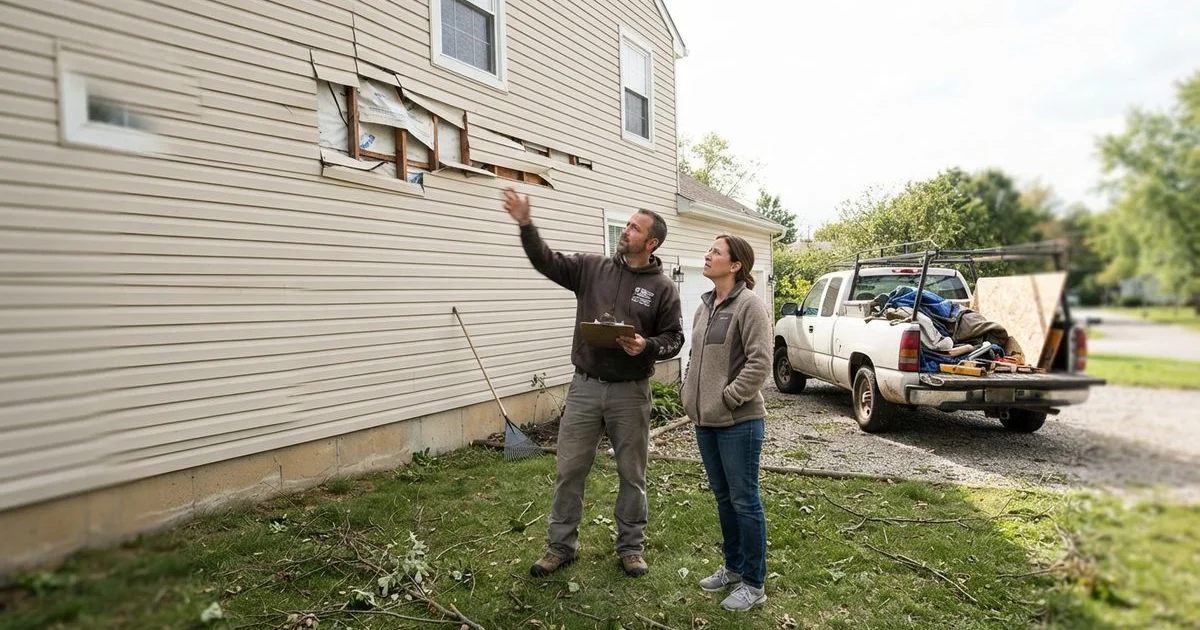
A storm ripping siding loose is stressful, but the first two days matter more than almost any other point in the repair process. What you do, and in what order, affects both how much additional damage the house takes on and how smoothly an insurance claim goes if you file one.
Step 1: check for safety hazards first
Before touching anything, walk the property from a distance and look for downed power lines, gas smell, or structural damage that suggests part of the wall or roof isn’t stable. If anything looks unsafe, stay back and call the appropriate utility or emergency line rather than approaching the damage yourself.
Step 2: photograph everything before you touch it
Once it’s safe, take wide shots of each damaged wall along with close-up photos of specific panels, holes, or missing sections. Photograph any debris on the ground near the house too, since it can help establish what caused the damage. This documentation matters most in its original, untouched state, so resist the urge to start cleanup before you’ve captured it.
Step 3: stop water from getting further in
Exposed wall sheathing behind missing siding lets water in fast, and Florida’s heat and humidity give mold a head start within days, not weeks. A basic tarp, secured with furring strips or weighted along the edges, is usually enough as a temporary measure until permanent repairs can happen. If the damage is at ground level and the tarping is straightforward, this is a task many homeowners handle themselves. Anything above the first story, near power lines, or requiring a ladder in unstable conditions is worth paying a crew for rather than risking a fall.
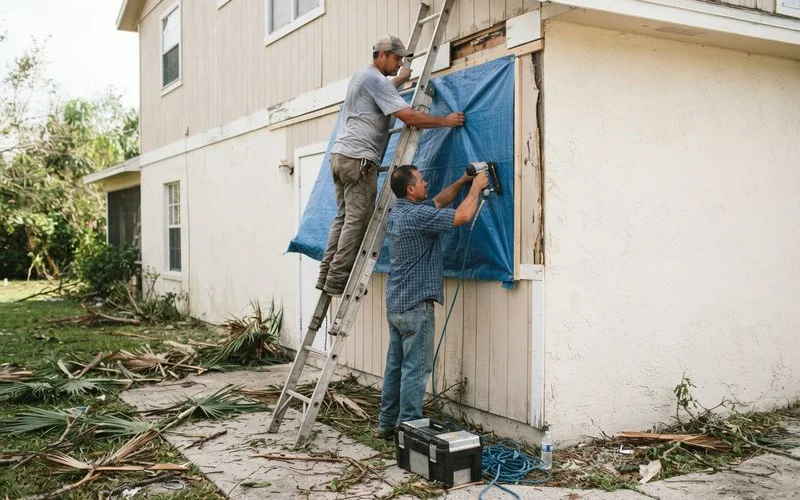
Step 4: call your insurer and get repair quotes moving
Most policies expect homeowners to take reasonable steps to prevent further damage, so a temporary tarp or board-up generally doesn’t jeopardize a claim, and many insurers reimburse that cost. Contact your insurance company to start the claim, and separately begin reaching out to local repair contractors so you’re not waiting on one process to start the other. Crews specializing in siding repair in this area are used to the post-storm rush and can often get a temporary fix scheduled faster than a full replacement.
What to expect in the days after
| Timeframe | Typical priority |
|---|---|
| Hours 0-6 | Safety check, photograph damage, avoid touching hazards |
| Hours 6-24 | Temporary tarping or board-up if safe to do |
| Day 1-2 | File insurance claim, contact contractors for quotes |
| Week 1-2 | Adjuster inspection, written repair estimate |
| Following weeks | Scheduled permanent repair once materials and crew availability align |
Avoiding a second round of damage
A rushed, poorly secured tarp can do almost as much harm as no tarp at all if it blows loose in a follow-up storm, which happens more than once in a busy Central Florida storm season. Use enough fasteners or weight to hold the tarp through another round of wind, and check it daily until the permanent repair is done. If you’re unsure whether a temporary fix will actually hold, it’s worth the cost of a professional visit rather than gambling on it through the next system that comes through.
For homeowners comparing repair crews under time pressure, this directory’s siding contractor listings are scored partly on responsiveness, which tends to matter most exactly in this kind of situation. See how those scores are built if you want the full method before you start calling around.
Questions people ask
- Should I remove damaged siding panels myself right after a storm?
- Only if it's safe and simple, like pulling a fully detached panel off the ground. Leave anything still attached or anything near power lines or a damaged roofline to a professional.
- How fast should I cover exposed sheathing?
- As soon as it's safe to do so, ideally within a day. Exposed wall sheathing lets water in quickly, and mold and rot can start within days in Florida's humidity.
- Do I need a contractor for temporary tarping, or can I do it myself?
- Simple, ground-level tarping is a reasonable DIY task if you have the materials and it's safe to access. Anything above the first story or involving a ladder in wet or windy conditions is worth calling a pro for.
- When should I call my insurance company versus a contractor first?
- Photograph the damage first, then you can contact either in whatever order is faster for you. Most insurers expect you to take reasonable steps to prevent further damage, so don't wait for an adjuster before doing basic protective measures.