Getting your siding ready for hurricane season in Lake County
By Aisha Kowalski · Updated 2026-08-22
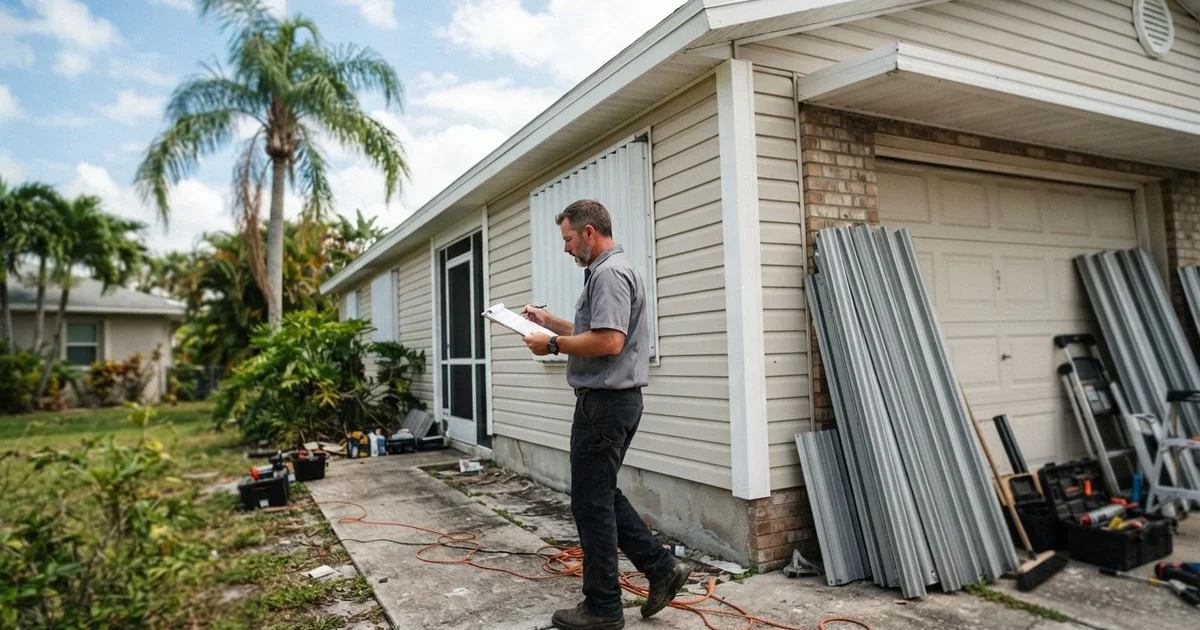
Hurricane season in Florida runs long, and the homeowners who come through it with the least siding damage are usually the ones who did a walk-around inspection before the first named storm, not after. None of this takes more than an afternoon, and it can meaningfully reduce how much wind and rain damage your home takes on.
Start with a full walk-around
Walk the entire perimeter of your house and look closely at each wall, not just the ones you pass every day. Check for panels that have started to pull away from the wall, cracked or warped sections, and any spot where caulking around windows or trim has shrunk or separated. Loose panels are the biggest risk during a storm, since wind can catch an edge and peel back an entire section, exposing the sheathing underneath.
What to check, wall by wall
- Fastening. Give panels a gentle push near the edges and corners. Vinyl should feel snug against the wall, not loose or rattling.
- Caulking and sealant. Look for gaps around window and door trim where water could get behind the siding during wind-driven rain.
- Corner posts and trim. These take the brunt of wind pressure at building corners and are worth checking for cracks or separation.
- Low areas near grade. Siding close to the ground can trap moisture and deteriorate faster, which weakens it right where storm debris often hits first.
- Nearby trees. Overhanging or dead branches that could fall or repeatedly scrape against a wall in high wind are worth trimming back before the season, not during it.
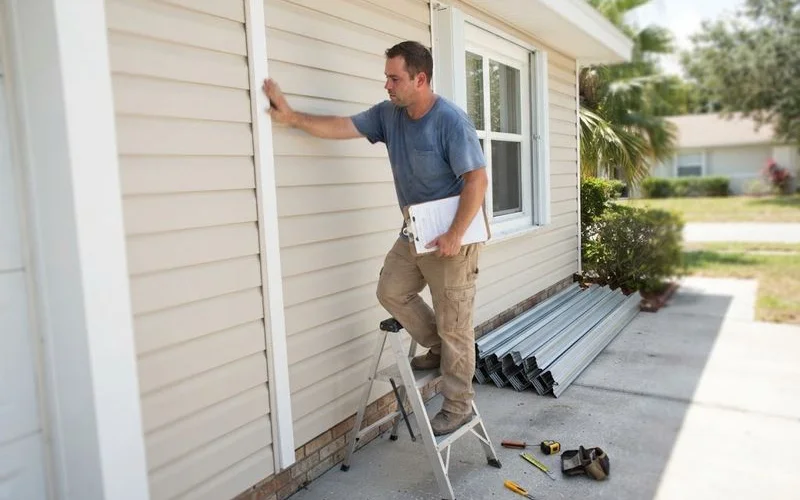
A quick reference checklist
| Item | What to look for |
|---|---|
| Panel fastening | Loose, rattling, or visibly detached sections |
| Caulking and seals | Gaps or shrinkage around windows, doors, trim |
| Corners and trim | Cracks, separation, or missing corner posts |
| Low wall areas | Moisture staining, softness, or discoloration |
| Nearby trees | Dead or overhanging branches near walls |
Lake County and wind code
Lake County sits outside Florida’s High-Velocity Hurricane Zone, the strictest wind-resistance classification reserved for the most exposed coastal counties. That doesn’t mean siding here faces no wind requirements. Standard Florida Building Code still sets real wind-resistance standards for materials and installation, and a properly installed, well-maintained siding system holds up to typical Central Florida storm conditions reasonably well. The risk isn’t usually the material itself failing outright, it’s small, unaddressed problems, like a loose panel or a gap in caulking, that a storm turns into a much bigger repair.
If you find a problem before the season starts
Minor issues, like resealing a gap or refastening a loose panel, are quick fixes that many siding repair contractors in Lake County can schedule well ahead of storm season, before demand spikes. If your inspection turns up more significant damage, getting it addressed in the spring rather than waiting means you’re not competing with every other homeowner calling the same crews after a storm actually hits. If a storm does get to your siding before repairs are done, the guide to the first 48 hours after storm damage covers what to prioritize.
Check this directory’s full list of local providers if you need a repair scheduled, and see the scoring method for how responsiveness and workmanship factor into the rankings, both of which matter more once storm season is underway and everyone needs a crew at once.
Questions people ask
- When should I inspect my siding before hurricane season?
- Late spring, before the season ramps up, gives enough time to schedule repairs without competing with the post-storm rush that hits every contractor at once once a system actually comes through.
- Is Lake County in a High-Velocity Hurricane Zone?
- No. Lake County falls under Florida's standard building code wind requirements rather than the stricter High-Velocity Hurricane Zone rules that apply to counties like Miami-Dade and Broward, though standard code still requires real wind resistance.
- Can loose siding really cause bigger damage in a storm?
- Yes. A single loose or missing panel gives wind and rain a way behind the wall, which can lead to sheathing damage that's far more expensive to fix than replacing a panel before the storm.
- Should I trim trees near my house before hurricane season?
- Yes, overhanging or dead branches near siding are a common cause of storm damage. Trimming anything that could fall on or scrape against your walls is a worthwhile step alongside inspecting the siding itself.