Siding repair: when to DIY and when to call a pro
By Aisha Kowalski · Updated 2026-08-24
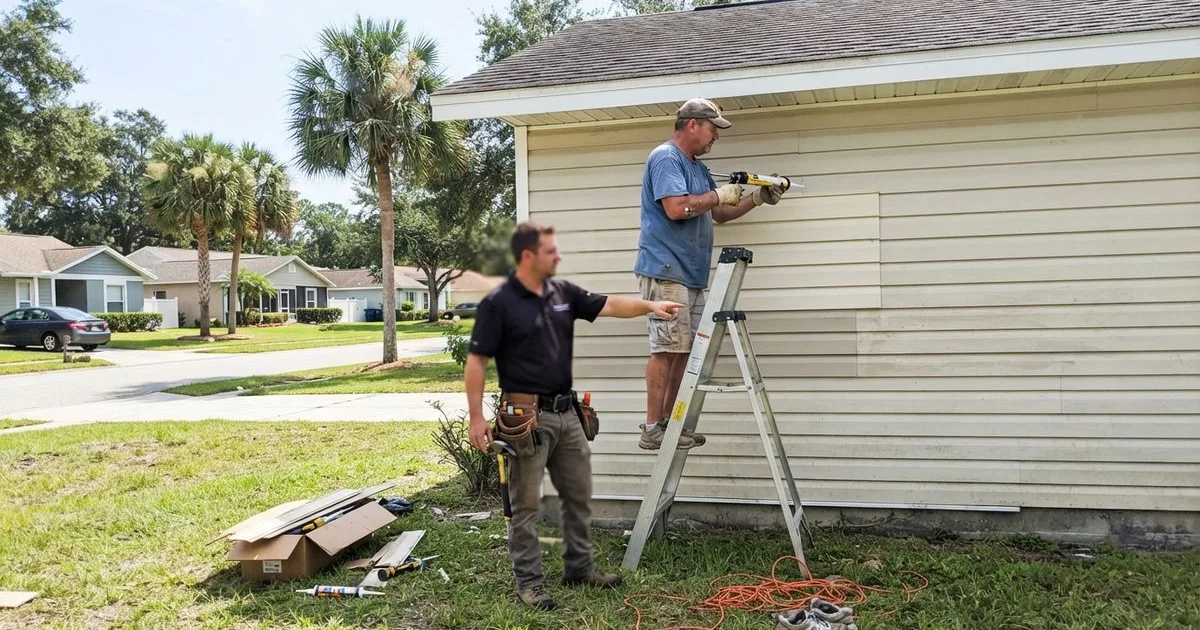
Not every siding problem needs a contractor, and not every siding problem is safe to handle yourself. The difference usually comes down to how contained the damage is, how high up it is, and whether there’s any sign that water has already gotten behind the wall.
Repairs a reasonably handy homeowner can often manage
- A single cracked or missing vinyl panel. With a zip tool to release the interlocking panel above it, swapping one damaged section for a matching replacement is one of the more accessible DIY siding repairs, as long as the damage is isolated and low enough to reach safely.
- Loose fasteners on an otherwise intact panel. Re-securing a panel that’s simply worked loose, without other visible damage, is usually a quick fix with basic tools.
- Minor caulking touch-ups. Resealing small gaps around trim where old caulk has shrunk is straightforward and helps prevent bigger problems down the line.
- Cleaning mildew or algae staining. A gentle wash with the right cleaner, applied correctly to avoid forcing water behind seams, is a task most homeowners can do without special equipment.
Repairs worth calling a professional for
- Anything above the first story. Ladder work on siding repair carries real fall risk, and it’s rarely worth attempting solo for a repair that a crew can do safely and quickly.
- Suspected water damage. If a panel feels soft, the wall behind it feels damp, or you notice a musty smell near an exterior wall, that points to moisture already trapped behind the siding, which needs a proper inspection rather than a cosmetic patch.
- Storm damage covering a large area. Multiple damaged panels, exposed sheathing, or anything affecting a full wall section is faster and safer to hand to a crew with the right equipment and materials on hand.
- Matching an older or discontinued product. Finding a color and profile match for siding installed years ago is often harder than it looks, and a professional with supplier relationships may have better luck than a homeowner searching online.
- Repairs near electrical or gas lines. Any work close to a meter, service line, or exterior outlet is worth handing off rather than risking contact while working.
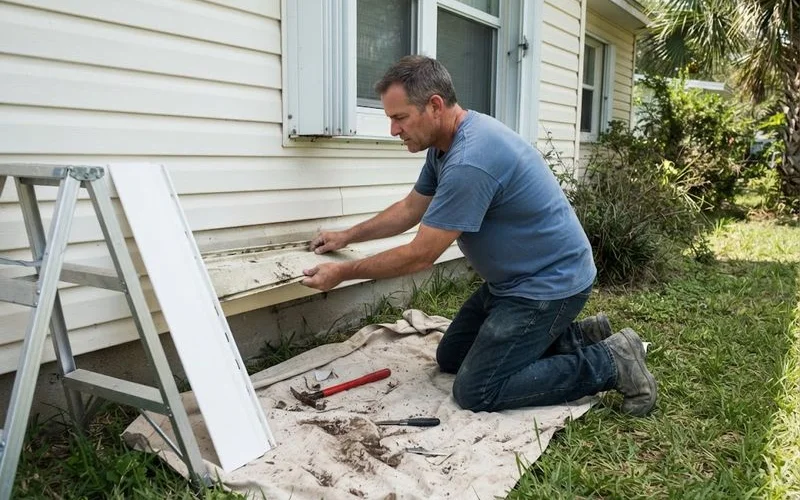
A quick decision guide
| Situation | DIY-friendly? |
|---|---|
| One cracked panel, ground level, no water damage | Usually yes |
| Loose fastener, no other visible damage | Usually yes |
| Panel above first story | Call a pro |
| Soft or damp wall behind siding | Call a pro |
| Damage across multiple wall sections | Call a pro |
| Matching an older, discontinued product | Call a pro |
Why DIY repairs sometimes backfire
A poorly fitted replacement panel or a caulk job that traps rather than sheds water can end up creating a worse problem than the original damage, especially in a humid climate where trapped moisture doesn’t dry out quickly. If a repair doesn’t look or feel like it’s sitting flush and sealed the way the surrounding panels do, it’s worth having a professional take a second look rather than assuming it’s fine.
Getting a professional’s help without overpaying
For repairs that clearly need a pro, get at least two quotes from crews doing siding repair work in Lake County regularly, since pricing and responsiveness both vary. Clean job sites and clear communication about scope are consistently mentioned strengths among locally reviewed crews, which is worth checking for on a small repair job just as much as a full replacement. This directory’s scoring method explains how those review patterns factor into the rankings, and the homepage has the full list of scored providers to compare.
Questions people ask
- Can I replace a single cracked vinyl panel myself?
- Often yes, if you have a zip tool to release the panel above it and a matching replacement piece. It's one of the more approachable DIY siding repairs for a reasonably handy homeowner.
- When is a repair too risky to DIY?
- Anything above the first story, involving suspected water damage behind the siding, or requiring matching an older discontinued product is worth handing to a professional rather than guessing at.
- Will a DIY repair void any warranty?
- It can, depending on the manufacturer and how the original installation was warrantied. Check your paperwork before attempting a repair on siding that's still under a workmanship or material warranty.
- How do I know if damage is more serious than it looks?
- If a panel feels soft, discolored, or the wall behind it feels damp when pressed, that suggests moisture has already gotten in, which is a sign to call a professional rather than patch the visible symptom.