What to expect from a siding installation, step by step
By Aisha Kowalski · Updated 2026-08-20
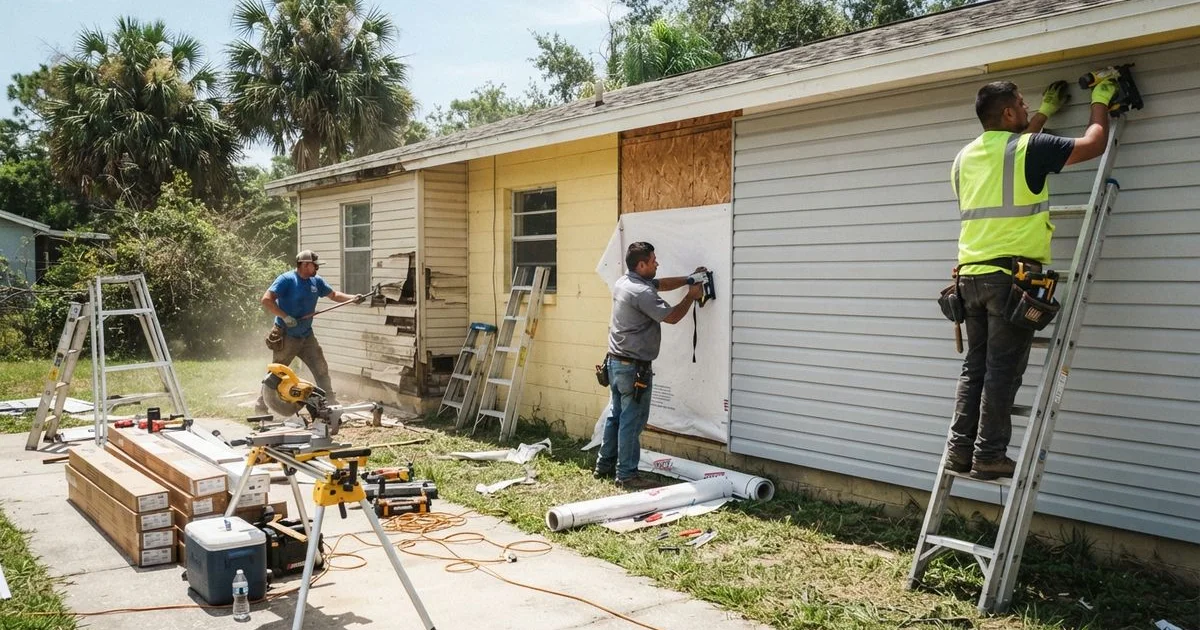
Knowing what a siding job actually looks like day to day makes it much easier to spot a crew doing things right, and to notice early if something feels off. Here’s the typical sequence for a residential installation in Lake County, from first contact to final walkthrough.
1. Measurement and quote
A contractor visits to measure exterior wall area, note trim and corner details, and check the current siding and sheathing condition where visible. This is also when material options get discussed, since the choice between vinyl, fiber cement, wood, or metal affects both price and installation timeline. A solid quote breaks out material, labor, tear-off, and any anticipated repair work as separate line items rather than one number.
2. Permitting
Most residential siding jobs in Lake County require a permit, which the contractor typically pulls on your behalf. This step can take anywhere from a few days to a couple of weeks depending on the local permitting office’s current workload, so it’s worth asking upfront who’s responsible for filing and roughly how long approval usually takes.
3. Material delivery and staging
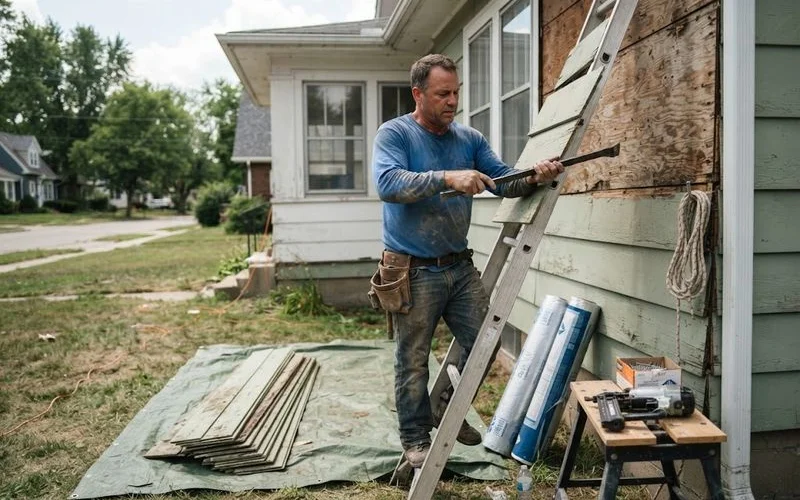
Once the permit clears, material gets ordered and delivered, often staged in the driveway or yard a day or two before work starts. This is a normal part of the process, though it’s worth confirming who’s responsible if weather threatens to damage stored material before installation begins.
4. Tear-off and prep
If old siding is coming off, the crew removes it, exposing the wall sheathing underneath. This is the point where hidden problems, like water damage or rot behind old panels, tend to surface. A trustworthy crew stops to show you anything unexpected before proceeding, rather than covering it up or adding charges without your sign-off.
5. House wrap and flashing
Before new siding goes up, the crew installs or repairs the moisture barrier and flashing around windows, doors, and rooflines. This layer does most of the actual work of keeping water out of your walls, so it’s worth asking specifically how this step is being handled even though it disappears from view once the new siding covers it.
6. Installation
New panels or boards go up, typically starting at a bottom corner and working across and up. Expect this to be the longest single phase of the job. Trim, corner posts, and detail work around windows and doors usually happen alongside or immediately after the main panel installation.
7. Final cleanup and walkthrough
A finished job includes cleared debris, removed nails and material scraps from the yard, and a walkthrough where the crew points out completed work and you get a chance to flag anything that looks off before final payment.
Typical timeline by project size
| Project scope | Typical duration |
|---|---|
| Single-wall or small repair section | 1 - 2 days |
| Full single-story home, standard material | 3 - 7 days |
| Full two-story home or complex trim | 1 - 2 weeks |
| Delays for weather or material backorder | Add several days to weeks |
Cleanup and communication throughout the job are two of the most consistently praised traits among siding installation and replacement providers reviewed in this area, alongside crews staying on schedule. If a contractor’s quote or early communication feels vague about any of the steps above, that’s often a preview of how the rest of the job will go, so it’s worth asking questions before signing. Compare a few options on the full directory, where this site’s scoring method weighs exactly that kind of recurring review pattern, not just star averages.
Questions people ask
- How long does a full siding installation take?
- Most single-family homes take somewhere between three days and two weeks, depending on the material, wall condition, and how much trim and corner detail the house has. Weather delays are common in Florida's rainy season.
- Will I need to leave the house during installation?
- No, most crews work entirely on the exterior and homeowners stay in the house throughout, though expect noise and limited access to specific windows or doors on a given day.
- What happens if the crew finds rot behind the old siding?
- A good contractor pauses to show you the damage, explains the repair options and added cost, and gets your approval before proceeding, rather than covering it up or silently adding charges.
- Do I need to be home during the installation?
- Not for every day of the job, but it helps to be available for the initial walkthrough, any discovery of unexpected damage, and the final inspection so you can review the work before the crew leaves.
Related on this site
- Browse siding installation & replacement providers
- Best siding installation & replacement in Lake County , Florida →
- Siding permits and code requirements in Lake County, Florida
- Siding repair: when to DIY and when to call a pro
- Wood and cedar siding maintenance: what the upkeep really involves
- All guides →